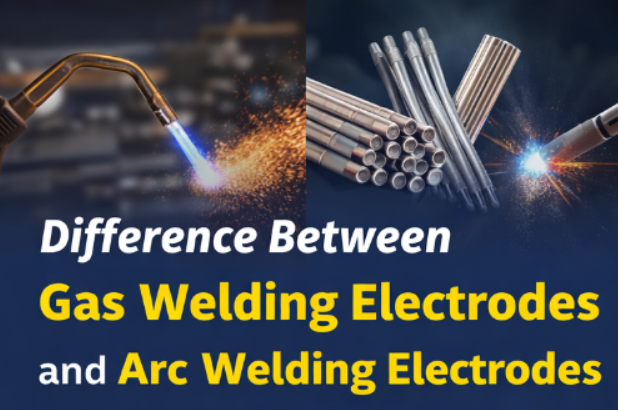
Difference Between Gas Welding Electrodes and Arc Welding Electrodes
Welding electrodes play a critical role in determining weld quality, strength, and performance. Among the most commonly used types are Gas Welding Electrodes and Arc Welding Electrodes. Although both serve the same basic purpose—joining metals—their working principles, applications, materials, and performance characteristics are very different.
At Patel Associates, we regularly guide customers in choosing the right welding consumables for their applications. This blog provides a clear, in-depth comparison to help you understand the difference between gas welding electrodes and arc welding electrodes and select the best option for your job.
What Are Gas Welding Electrodes?
Gas welding electrodes, also known as gas welding filler rods, are used in oxy-acetylene or oxy-fuel welding processes. These electrodes do not carry electric current. Instead, they melt due to the heat generated by the gas flame and fill the joint between the base metals.
Key Characteristics of Gas Welding Electrodes
- No electrical current involved
- Heat source is a gas flame
- Smooth and controlled melting
- Usually bare rods (no flux coating)
- Ideal for thin materials and repair work
What Are Arc Welding Electrodes?
Arc welding electrodes are used in electric arc welding processes, such as SMAW (Stick Welding), MIG, or TIG (with filler rods). In arc welding, an electric current passes through the electrode, generating an arc that melts both the electrode and the base metal.
Key Characteristics of Arc Welding Electrodes
- Uses electrical current
- Produces high welding temperatures
- Often flux-coated (in SMAW)
- Faster welding speed
- Suitable for thick and heavy materials
Major Differences Between Gas Welding Electrodes and Arc Welding Electrodes
- Heat Source
- Gas Welding Electrodes: Heat is produced by an oxy-fuel flame.
- Arc Welding Electrodes: Heat is generated by an electric arc.
- Electrical Conductivity
- Gas Welding: Electrodes do not conduct electricity.
- Arc Welding: Electrodes are electrically conductive.
- Coating & Composition
- Gas Welding Electrodes: Usually bare rods, composition matches base metal.
- Arc Welding Electrodes: Often flux-coated to protect weld pool and improve arc stability.
- Welding Speed
- Gas Welding: Slower process, more controlled.
- Arc Welding: Faster welding speed, higher productivity.
- Material Thickness
- Gas Welding Electrodes: Best for thin sheets, pipes, and delicate repairs.
- Arc Welding Electrodes: Suitable for medium to thick materials and structural work.
- Weld Penetration
- Gas Welding: Shallow to moderate penetration.
- Arc Welding: Deep penetration and strong weld joints.
- Applications
- Gas Welding Electrodes:
- Automotive repair
- Sheet metal work
- Pipe repair
- Maintenance and brazing
- Arc Welding Electrodes:
- Structural fabrication
- Heavy engineering
- Construction sites
- Industrial manufacturing
- Equipment Requirement
- Gas Welding: Requires gas cylinders, regulators, torch, and hoses.
- Arc Welding: Requires welding machine, power supply, and cables.
- Skill Level
- Gas Welding: Requires precise flame control and patience.
- Arc Welding: Requires electrical and arc control knowledge.
- Cost Consideration
- Gas Welding: Lower initial machine cost, higher gas consumption.
- Arc Welding: Higher machine cost, but more economical for large-scale work.
Comparison Table: Gas Welding vs Arc Welding Electrodes
| Feature | Gas Welding Electrodes | Arc Welding Electrodes |
| Heat Source | Gas flame | Electric arc |
| Electricity | Not required | Required |
| Coating | Bare rods | Flux-coated / bare |
| Welding Speed | Slow | Fast |
| Material Thickness | Thin materials | Thick materials |
| Penetration | Low to moderate | High |
| Industrial Use | Light & repair work | Heavy & structural work |
Which One Should You Choose?
Choose Gas Welding Electrodes if:
- You are working on thin sheets
- Precision and control are required
- Repair and maintenance work is needed
- Electricity is not easily available
Choose Arc Welding Electrodes if:
- You need strong, deep welds
- Working on heavy structures
- High productivity is required
- Industrial or construction welding is involved
At Patel Associates, we help customers choose electrodes based on material type, job requirement, and budget.
Importance of Choosing the Right Electrode
Using the wrong electrode can lead to:
❌ Weak welds
❌ Cracks and porosity
❌ Excessive spatter
❌ Higher repair costs
Selecting the correct electrode ensures:
✔ Strong joints
✔ Better weld appearance
✔ Long-term durability
✔ Reduced rework
Why Buy Welding Electrodes from Patel Associates?
Patel Associates offers:
- High-quality gas and arc welding electrodes
- Consistent performance and reliability
- Competitive pricing
- Expert technical guidance
- Trusted supply for workshops and industries
We focus on quality, safety, and customer satisfaction.